Is this book going to be too technical for a beginner like me?
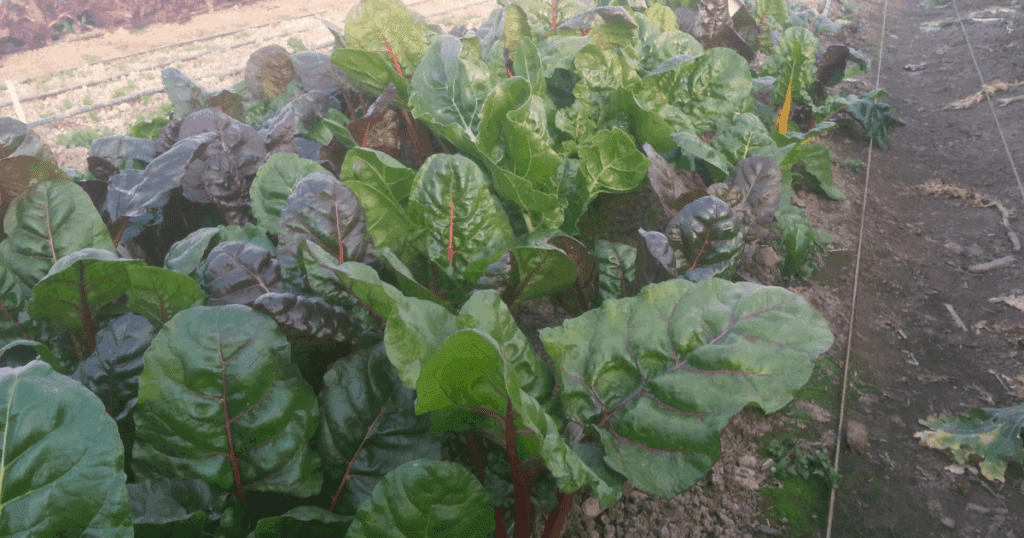
Chard in the hoophouse in February. Photo: Wren Vile
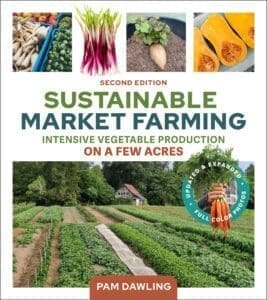
It’s a big book, so this is a valid question! I have more than 30 years’ experience explaining gardening to beginners and new growers, daily. I learned good ways to explain in words, for the times I couldn’t demonstrate in person. Also, this is the second edition of Sustainable Market Farming, and I have polished my explanations!
No need to read the whole book cover-to-cover. Use the contents page and the excellent index to find the information you currently need, and keep the rest for another time. You know where to find the bits you skipped over!
Having a comprehensive book surpasses scrolling the web, wading through 10 people’s versions and getting distracted. Sitting in your favorite chair on the porch or by the woodstove with a reliable book is much more satisfying!
I’m a firm believer in starting out right, with good, farm-specific planning and organizational skills, techniques and habits. That way, you build on what you’ve learned and don’t need to unlearn anything to accommodate new information. Reading the planning chapters during the slowest part of your year sets you up for a well-organized growing season. People with plans are the nimblest at making new plans when circumstances change.
I wrote this book with market farmers and others growing on a few acres in mind. Given the importance of providing healthy local food to as many people as possible, efficiency and effectiveness are important at any scale, including feeding your household.
I’m proud that my book contains lots of technical details. These will help you get the best possible results, as you incorporate more of the details each year, once you appreciate the reasons for them, and you see the benefits of certain ways of doing things.
In the face of climate change, details such as the soil temperature for garlic planting matter more. It’s not the date that counts, it’s whether the soil has cooled down enough to get the right amount of growth before winter.You will find yourself returning to Sustainable Market Farming frequently throughout your farming career. You won’t need to buy another book on vegetable growing for a long time!
Will this book help growers beyond the US mid-Atlantic?
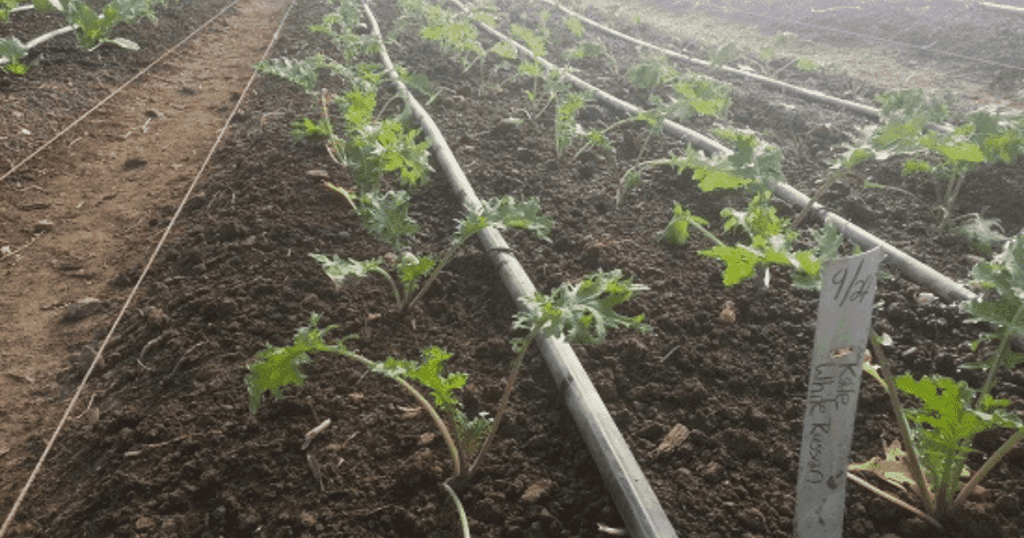
Hoophouse White Russian kale. Photo: Wren Vile
It’s true that gardening and farming books generally reflect the methods best suited to the writer’s region. Every farmer-writer comes from some region or other, and their books communicate this.
It’s also true that climates are changing and we need to try varieties and crops we didn’t grow five years ago. We need to adjust planting dates, be on the lookout for new bugs, and learn new approaches for integrated pest, disease, and weed management.
I make a point in Sustainable Market Farming to connect sowing and transplanting dates to the weather conditions, air and soil temperatures, days after the last frost, day length, and soil moisture. I have a table of winter-kill temperatures. You know your climate best, and when you are likely to have certain conditions. Use my information to make your best decisions.
The information is relevant to every climate zone in contiguous North America, and then some. I have readers in Australia, Europe, Mexico, Korea, Japan, and other Asian countries. Before moving to the US, I gardened in various parts of England, including the challenging Yorkshire Moors, where the rain comes sideways. Sharing tips with other local growers, and touring each other’s farms, is an extremely valuable complement to a broad, inclusive book such as this.
I’ve been farming for 15 years, is this book going to help people like me?
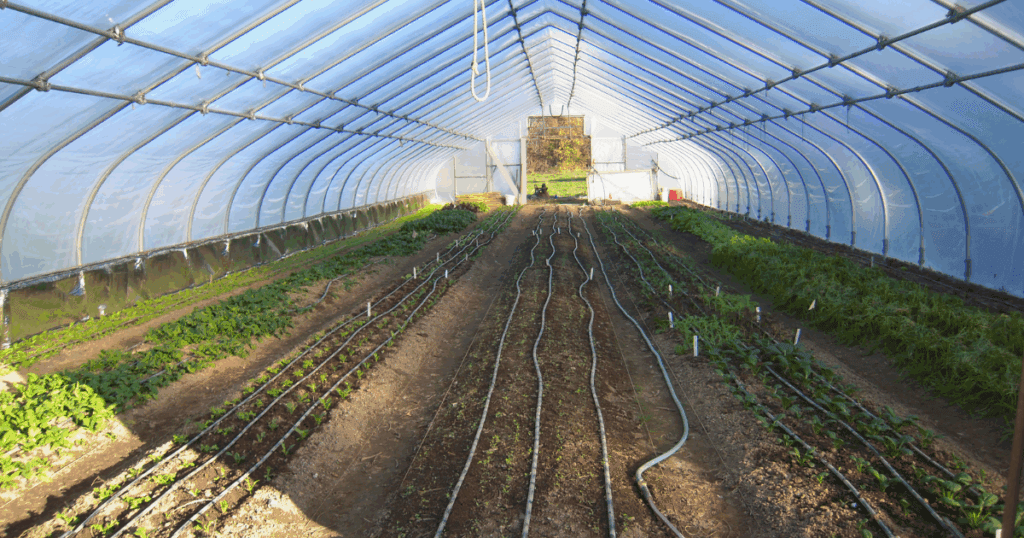
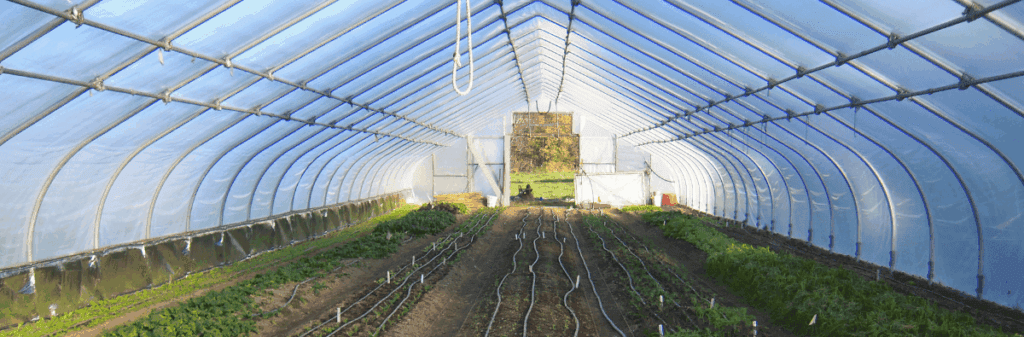
November 3 hoophouse 2. Photo: Wren Vile
We haven’t met yet, and I don’t know what you know, but I do have friends who are experienced growers, who deeply appreciate my book. Some of them keep a copy in their barn for quick reference, some have copies for their apprentices or interns.
In my book, you’ll find in-depth profiles of a full range of vegetable crops (maybe some you haven’t grown yet), and detailed information on tasks from planning to harvest. Here you can discover newer guidelines for improving and maintaining soil quality, and find resilient farming practices to meet new environmental challenges.
I’ve been farming for over 30 years, and I still eagerly read lots of gardening and farming books, compare notes with other growers, and love to consider different approaches. Anyone valuing the ability to learn from failures or indifferent results and take their operation to the next level will appreciate this book.
Every farm tour I have been on has given me an idea. A different type of equipment, new varieties, different crop spacings or planting dates. Wall-to-wall hoophouse lettuce (harvest your own path!), looped drip-tape runs, more tomato successions, painter’s tape for labeling flats. So many great ideas I wouldn’t have thought of on my own.
Is this book a good text for a sustainable agriculture course?
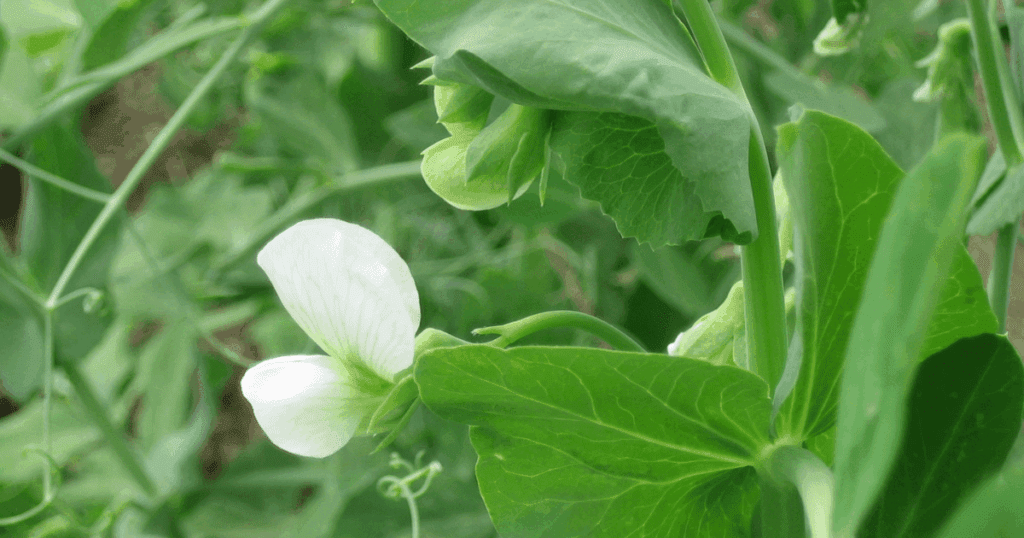
Peas, sugar snap flowers. Photo: Kathryn Simmons
Many colleges already use my book as a reference text for sustainable agriculture courses and speak highly of it. I have had college students at conferences tell me they use my book, and they even coined a question, “What would Pam do?” when faced with a new situation. Sustainable Market Farming, Second Edition, is thorough and systematic, with no extraneous waffle. In a single volume, it provides a complete guide to year-round organic vegetable production for small-scale farmers and market gardeners – the very people college courses hope to nurture and roll out.
Why would I buy the book when there’s so much free information on the web?
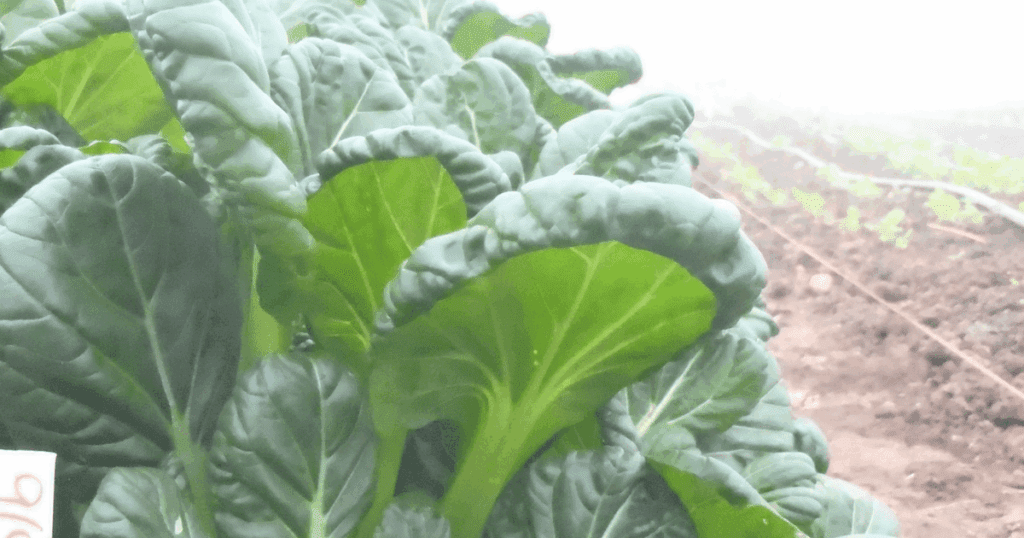
Tatsoi. Photo: Wren Vile
Yes, the web is free. Anybody at all can post their opinions. The web has quantity. Quality varies. Is the content good value? You may not be paying money, but you are putting in your time.
Much of the vegetable growing content on the web is for small-scale backyard gardeners, or homesteaders. People doing hobby gardening may not care if it takes them a long time, weeding by hand. They may like growing seedlings in egg cartons, but that might not work at scale, or for growing large starts.
The web is massive. You can get sent back to the same pages over and over. Or you can get sent down a rabbit-hole. After an hour searching on the web, I can feel confused, frustrated and exhausted rather than inspired. I’d rather read a book!