




Go Back

Page Count:224
Images:Black & White Images
Dimensions: 8.5 × 8.5 × 0.448 in
Publication Date:March 01, 2014
ISBN:9780865717657
Foreword:Severine von Tscharner Fleming
Illustrated byMarie Bilodeau
Sustainability:Printed on 100% recycled paper
Printed in:Canada
Audiobook Narrator:Diego Footer
Audiobook Length:7:03:52

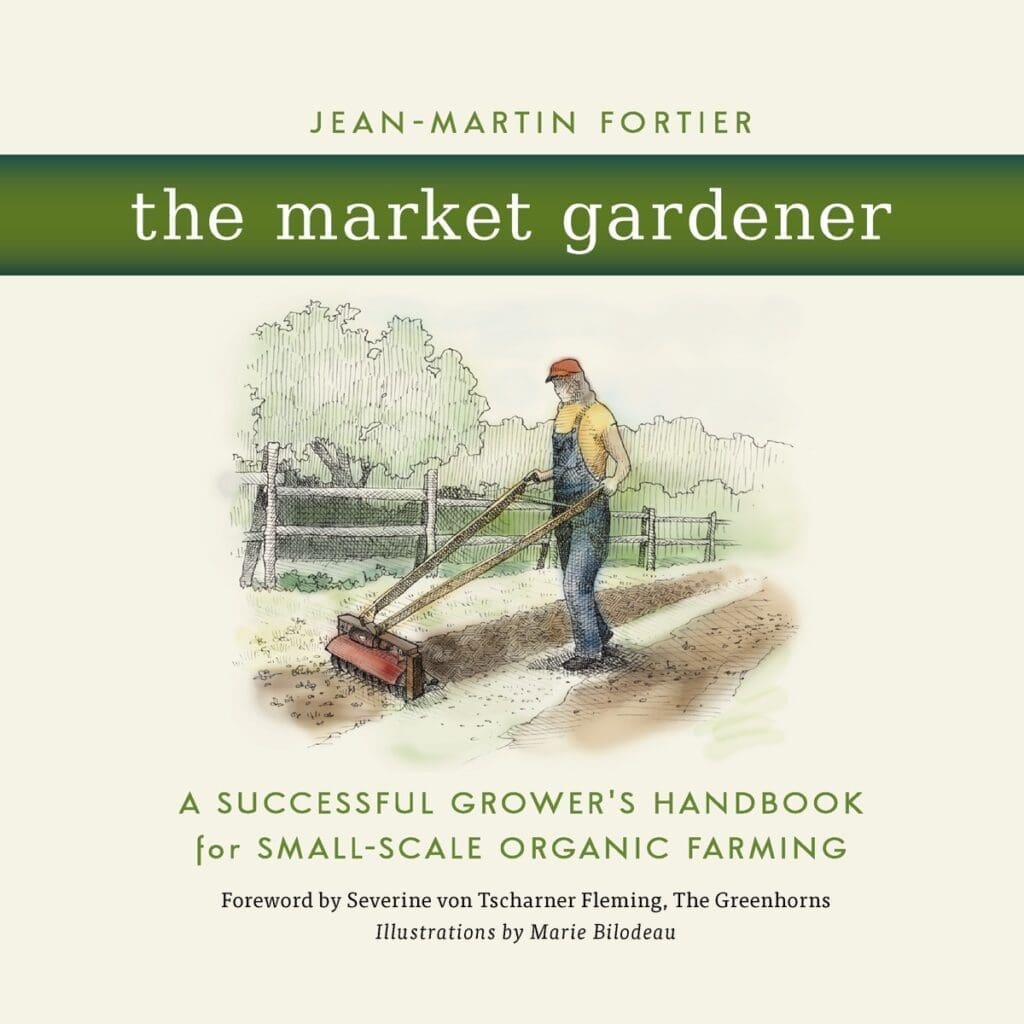
The Market Gardener

A Successful Grower's Handbook for Small-Scale Organic Farming

Transform 1.5 acres into a thriving six-figure annual income through proven, low-tech, and biologically intensive organic farming methods.

As local organic agriculture continues to flourish, a new cohort of professional growers is reclaiming the food system through innovative, micro-scale farming. The Market Gardener provides a complete playbook for transitioning from hobby gardening to a profitable farm operation that feeds hundreds of families while maintaining a balanced lifestyle. This modern handbook is rooted in over two decades of real-world success at Les Jardins de la Grelinette, demonstrating that high-yield production does not require massive acreage or expensive industrial machinery.

The core of this approach lies in maximizing profit per square foot through intensive, sustainable techniques that work in virtually any climate. By prioritizing soil health and using scale-appropriate tools—like the broadfork and two-wheel tractor—farmers can significantly minimize start-up and production costs. The book provides technical density on everything from organic fertilization and weed management to efficient harvest and storage workflows, ensuring that new and seasoned growers alike have a step-by-step recipe for success.

Beyond technical instruction, this work represents a paradigm shift in modern agriculture, addressing social problems like land access and regional unemployment by proving that small-scale farming is a viable, fulfilling career. With over a quarter-million copies sold in nine languages, Jean-Martin Fortier’s methods have trained a global community of growers to compete effectively against industrial models. It is an essential resource for anyone committed to ecology, community, and a resilient local food future.

Book Awards

WINNER | 2015 American Horticultural Society Book Awards

Earn up to 30 Points.

Who This Book Is For

  • Aspiring Professional Growers: Individuals looking for a proven framework to launch a successful small-scale farm.
  • Homesteaders: Those seeking to transition their gardens into a six-figure income stream.
  • Urban and Micro-scale Farmers: Growers working on limited land who need to maximize production density.
  • Agricultural Educators: Teachers using the book as a textbook for workshops and incubator farm programs.

What You'll Learn

  • Site Selection: Evaluate soil quality, topography, and market access to find the ideal location for your farm.
  • Biologically Intensive Methods: Implement permanent raised beds and crop rotations to boost yields without heavy tillage.
  • Low-tech Tools: Master cost-effective machinery like the two-wheel tractor and specialized precision seeders.
  • Organic Fertility: Manage soil health using high-quality compost, natural fertilizers, and green manures.
  • Direct Marketing: Command premium prices through CSA networks and farmers markets to maximize profitability.
  • Crop Planning: Utilize financial templates and crop calendars to track profits and scale your business systematically.

Praise for the book

…should be of great use to market growers everywhere.

ELIOT COLEMAN, organic farming pioneer and author, Winter Harvest Handbook

This is a fantastic addition to any aspiring market gardener’s library…

JOSH VOLK, Slow Hand Farm, Portland, Oregon

Provides beginning farmers a solid framework of the information they need to become successful small-scale organic growers

ADAM LEMIEUX, Product Manager of Tools & Supplies, Johnny’s Selected Seeds

What Makes This Book Unique

This guide is endorsed by industry leaders, most notably organic farming legend Eliot Coleman, who notes that this work picks up exactly where his own seminal research left off. A global success with over 250,000 copies sold worldwide, the strategies outlined have proven effective across diverse climates and geographical regions. The book’s core appeal is its mission-driven ROI, introducing the specific Market Gardener Method which empowers growers to build financial success as well as a healthy work-life balance on as little as 1.5 to 2 acres. To ensure practical success, it offers exceptional technical depth, moving beyond general theory to provide annotated bibliographies, comprehensive tool supplier lists, and highly specific crop-by-crop notes.

Table of Contents

  • Acknowledgments
  • Foreword
  • Preface
  • 1. Small Is Profitable
    • Can You Really Live ff 1.5 Acres?
    • Not Just Making a Good Living, but Making a Good Life
  • 2. Succeeding as a Small-Scale Organic Vegetable Grower
    • A Biologically Intensive Approach
    • Minimizing Start-Up Costs
    • Minimizing Production Costs
    • Direct Selling
    • Adding Value to the Crops
    • Learning the Craft
  • 3. Finding the Right Site
    • Climate and Microclimate
    • Market Access
    • Growing Space Needed
    • Soil Quality
    • Topography
    • Drainage
    • Access to Water
    • Infrastructure
    • Assessing Possible Pollution Problems
  • 4. Designing the Market Garden
    • Buildings and Foot Traffic
      Standardizing the Garden Layout
      Locating the Greenhouse and Tunnels
      Protection against Deer
      Windbreaks
      Irrigation
  • 5. Minimum Tillage and Appropriate Machinery
    • Permanent Raised Beds
    • The Two-Wheel Tractor
    • The Broadfork (Grelinette)
    • Tarps and Pre-Crop Ground Cover
    • To Till or not to Till
  • 6. Fertilizing Organically
    • Soil Tests
    • Crop Requirements
    • Managing Soil Fertility
    • Good Compost
    • Relying on Natural Fertilizers – Why?
    • Establishing Crop Rotation
    • Crop Rotation at Les Jardins de la Grelinette
    • Green Manure and Cover Crops
    • Connecting with Soil Ecology
  • 7. Starting Seeds Indoors
    • Seeding in Cell Flats
    • The Soil Mix
    • Filling Cell Flats
    • The Seedling Room
    • The Evolving Plant Nursery
    • Heating and Ventilation of the Nursery
    • How to Water Seedlings
    • Potting up
    • Transplanting into the Gardens
  • 8. Direct Seeding
    • Precision Seeders
    • Seedbed Preparation
    • Record Keeping
  • 9. Weed Management
    • Cultivating with Hoes
    • Weeding with Tarps
    • The Stale Seedbed Technique
    • Flame Weeding
    • Mulching
    • Weed Control Technology
  • 10. Insect Pests and Diseases
    • Scouting
    • Disease Prevention
    • Using Biopesticides
  • 11. Season Extension
    • Floating Row Cover and Low Tunnels
    • Caterpillar Tunnels
    • Hoophouses
  • 12. Harvest and Storage
    • Harvesting Efficiently
    • Harvest Help
    • The Cold Room
  • 13. Crop Planning
    • Setting Farming Objectives
    • Determining Production
    • Establishing a Crop Calendar
    • Making a Garden Plan
    • Record Keeping
  • Conclusion: Farming for Ecology, Community, and Lifestyle
  • Appendix 1: Crop Notes
  • Appendix 2: Tools and Suppliers
  • Appendix 3: Garden Plan
  • Appendix 4: Annotated Bibliography
  • Appendix 5: Glossary
  • Index
  • About the Author

Accessibility Information

Coming Soon

More from Jean-Martin Fortier

Small-Scale Farming: Frequently Asked Questions

Can I really make a living on only 1.5 acres of land?

Yes, by using biologically intensive methods and direct marketing, it is possible to generate a six-figure income while feeding over 200 families.

Do I need to buy a full-sized tractor to start my market garden?

No, this system utilizes appropriate, low-tech machinery like two-wheel tractors and broadforks to keep overhead costs low and soil health high.

How do I manage weeds without using chemical herbicides?

The book details organic strategies such as flame weeding, the stale seedbed technique, and the use of UV-treated tarps to manage weeds effectively.

Meet the Author

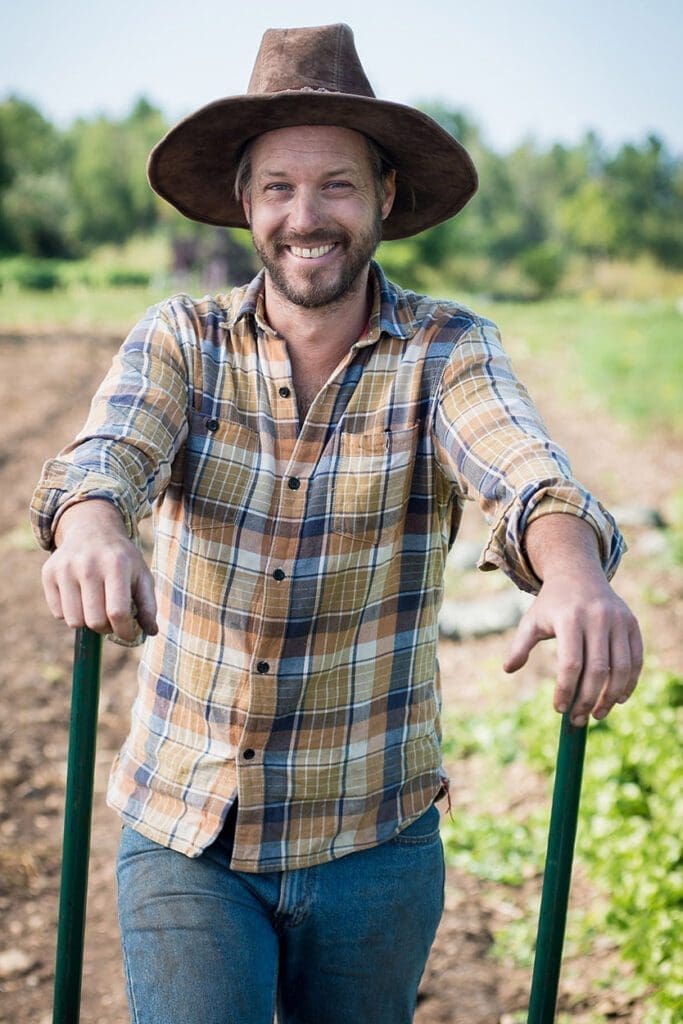
author Jean-Martin Fortier

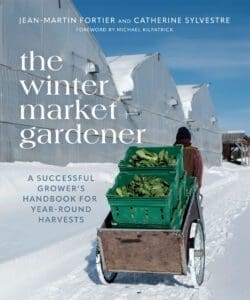
Jean-Martin Fortier is a farmer, author, and educator who has been at the forefront of the ecological, human-scale farming movement for more than two decades. Since 2004, he and his wife have operated Les Jardins de la Grelinette, a model two-acre microfarm celebrated for its remarkable productivity and efficiency. In 2017, Fortier founded the Market Gardener Institute, which has trained and supported over 11,000 farmers in 91 countries, helping them establish profitable small-scale organic farms rooted in regenerative practices. He is the bestselling author of The Market Gardener and co-author of The Winter Market Gardener, which together have sold more than 300,000 copies in 12 languages. His pioneering work has inspired a global shift toward resilient, soil-based food systems and earned him the Meritorious Service Cross from the Governor General of Canada. Fortier lives and farms in Quebec, Canada.

Articles from the book

You Might Also Like

Reviews

There are no reviews yet.

Be the first to review “The Market Gardener”

Related Categories

About the Publisher

New Society Publishers has been a leader in sustainable living books since 1980. Our books are printed on 100% post-consumer recycled paper to support the health of the planet.

B Corporation, SDG, and FSC Mixed Paper.
Select your currency
Secret Link