Go Back

Page Count:208
Images:Black & White Images
Dimensions: 8.5 × 11 × 0.448 in
Publication Date:October 01, 2012
ISBN:9780865717220
Illustrated byElizabeth Elwood Gates
Sustainability:Printed on 100% recycled paper
Printed in:Canada

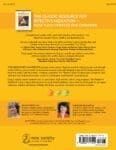
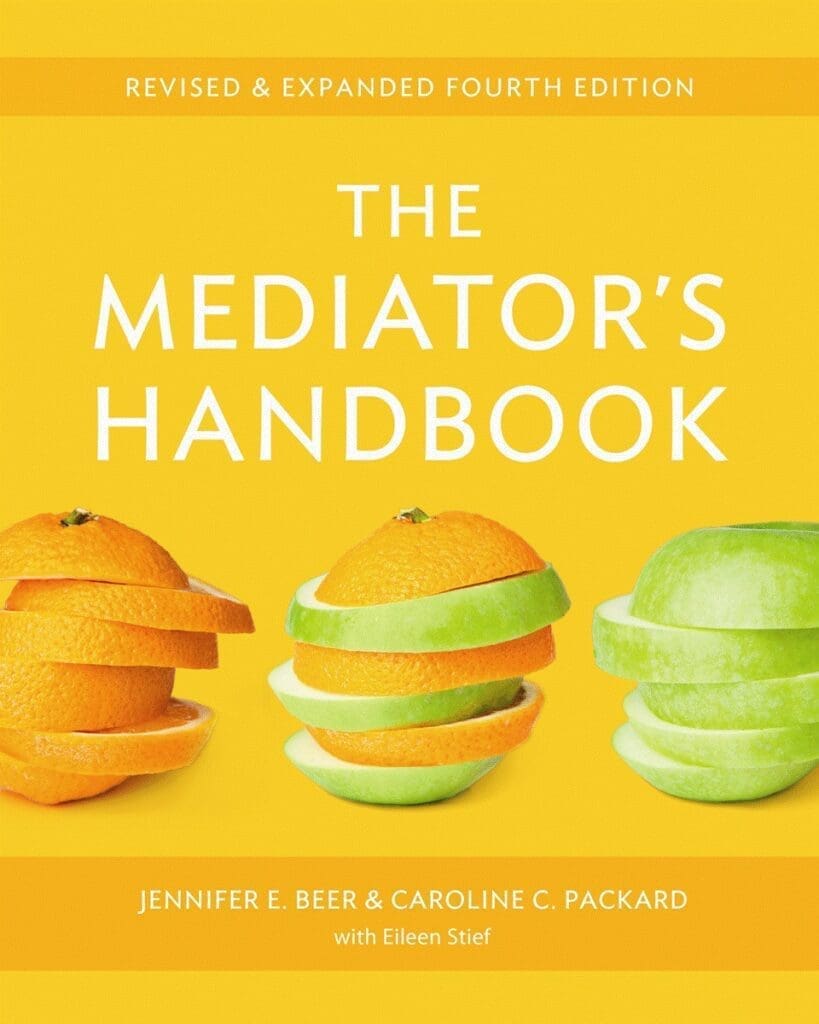
The Mediator’s Handbook

Revised & Expanded fourth edition

The Mediator’s Handbook presents a time-tested, step-by-step model for helping people work through conflict from first contact through reaching a lasting resolution. The Toolbox section details the skills mediators need to understand conflict,facilitate the process, and help participants make decisions.

Earn up to 35 Points.

The classic resource for effective mediation – now fully updated and expanded

The popular Mediator’s Handbook presents a time-tested, adaptable model for helping people work through conflict.

Starting with a new chapter on assessing conflict and bringing people to the table, it explains the process step-by-step, from opening conversations and exploring the situation, through the phases of finding resolution-deciding on topics, reviewing options, and testing agreements. The “Toolbox” section then details the concepts and skills a mediator needs in order to:

  • Understand the Conflict
  • Support the people
  • Facilitate the process
  • Guide decision-making.

The Mediator’s Handbook‘s emphasis is on what the mediator can do or say NOW, and on the underlying principles and core methods that can help the mediator make wise choices.

Long a popular course textbook for high schools, universities, and training programs, The Mediator’s Handbook is also a valued desk reference for professional mediators, and a practical guide for managers, organizers, teachers, and anyone working with clients, customers, volunteers, committees or teams.

Extensively revised to incorporate recent practice and thinking, the accessible manual format lays out a clear structure for new and occasional mediators, while offering a detailed, nuanced resource for professionals.

Praise for the book

A beautiful book, written with a deep understanding of the mediator’s art…

Hideaki Irie, Associate Professor, Faculty of Law, Kyushu University

Can you really make the classic book in its field even better? Authors Jennifer Beer and Caroline Packard prove the answer is a resounding “Yes!” Bravo!

G. Richard Shell, Professor, Wharton School of Business, author Bargaining for Advantage

I have taught from previous editions for 25 years, and this new edition is even better, with new insights into conflict and new strategies that work.

Susan Sgorbati, Director, The Conflict Resolution Program

Table of Contents

  • Preface
  • Overview
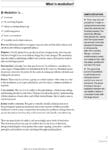
    • What is mediation?
    • A useful tool
    • What makes mediation work?
    • The mediator’s role
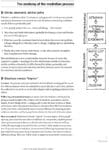
    • The anatomy of the mediation process
    • The anatomy of a session
    • Process-centered mediation
    • Guiding principles
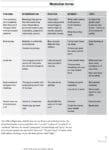
    • Mediation terms

THE PROCESS

  • Getting to the Table
    • Can mediation help this situation?
    • How people find a mediator
    • Voluntary or mandatory?
    • Initial conversations
    • Do they want to participate?
    • Defining the scope
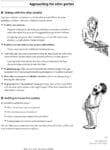
    • Approaching the other parties
    • Should I be the mediator?
    • Pre-mediation agreements and review
    • Choosing a location
  • The Mediation Session Part I: Exploring the Situation
    • Preparing yourself, co-mediators
    • Setting up
    • Opening
      • Opening: Welcome & warm-up
      • Opening: Logistics
      • Opening: Orientation
      • Opening: Participants’ role, willingness
    • Listening to Each Perspective
      • The Exchange
      • The Exchange: Facilitating
      • The Exchange: Tasks & flow
    • Clarify information
    • Check out interpretations
    • Listen for their concerns
    • Example + impact
    • Restate their interests
    • Note other relevant interests
    • Encourage empathy and reconciliation
    • Transition to Reaching Resolution
    • Separate Conversations
    • Uses for Separate Conversations
    • Breaking for Separate Conversations
    • Separate Conversations: Template
  • The Mediation Session Part II: Reaching Resolution
    • Reaching Resolution
    • Reaching Resolution: Sequence
    • Topic List
      • Topic List: Why it is crucial
      • Topic List: Drafting
      • Topic List: Wording
    • Midpoint check-in
    • Options
      • Options: Together come up with ideas
      • Options: Gut, interests, workability
      • Options: Reality testing
    • Decisions
      • Decisions: Gut, interests, workability
      • Decisions: Emotions, hesitations
    • Writing the Agreement
      • Writing the Agreement: Specifics
      • Writing the Agreement: Positive framing
    • Closing
      Afterwards: Wrapping up
      Multiple sessions

THE TOOLBOX

  • Understanding Conflict
    • Disputes & conflicts
    • Metaphors for understanding conflict
    • The conflict core
    • Common effects of conflict
    • The pleasures of conflict
    • When things heat up
    • The way out is through
    • The Conflict Triangle
    • People, Process, Problem
    • Which mode are you in?
  • Supporting the People
    • Supporting the people: Main skills
    • Setting the tone
    • Level of formality, taking notes
    • Confidentiality in practice
    • Giving your full attention
    • Elements of full attention
    • Acknowledging
    • Handling judgmental remarks
    • Protecting
    • From adversarial mode to cooperative mode
    • Avoid this Kettle of Fish
    • Attending to comfort & accessibility
    • Language and hearing difficulties
    • Working with people in all their variety
    • Finding commonalities
    • Scenarios: Emotionally difficult situations 111
  • Facilitating the Process
    • Facilitating the process
    • Impartial facilitation
    • Structuring the session
    • Structuring the discussion
    • When you can be directive
    • When to consult
    • Keeping on track
    • Crafting questions
      • Crafting questions: Word with care
      • Crafting questions: Spin it positive
      • Crafting questions: Follow up for clarification
    • Kinds of rewording
    • Reflecting back
    • Summarizing
      • Summarizing: Its many uses
    • Working visually
    • When to intervene
      • When to intervene: Stopping the momentum
      • When to intervene: Slowing the process down
    • Is it time to quit?
    • Ending a mediation
    • Scenarios: Facilitation challenges
  • Solving the Problem
    • Participants’ starting point: Power & rights
    • Changing the “positions” mindset
    • Interests
    • Layers of interests
    • Why interests matter
    • Finding space for solutions
    • Reframing
    • Checking out (mis)interpretations
    • Lies, perceptions, deceptions
    • Plain description of facts and needs
    • Flip it! ? Outcome-focused interests
    • Tactful wording of interests and topics
    • Summary of interests
    • Topic List examples
    • Eliciting ideas: Brainstorming
    • Eliciting ideas: Opening up possibilities
    • Can mediators suggest options?
    • Visual aids for making decisions
    • Types of resolution
    • “Typical” or “good enough” resolutions
    • What-ifs
    • Fallbacks: Contingencies, uncertainties
    • Step-down agreements: Smaller scope
    • When there’s no agreement
    • Final review: Workability
    • Final review: Future
    • Sample agreements
    • Scenarios: problem-solving challenges 173
  • Going Further
    • Going further
    • Adapting the process
    • Mediating with children & teens
    • Mediating across generations
    • Mediating family conflicts
    • Mediating employee conflicts
    • Participant evaluation
    • Mediator evaluation of a mediation
    • Evaluating yourself
    • The Handbook “soup pot”
    • Authors & contributors
    • Organizational support
  • Index

Accessibility Information

Coming Soon

Book Extras and Resources

Meet the Author

author Jennifer E. Beer

Dr. Jennifer E. Beer, PhD, combines mediation experience with her cultural anthropology background to lead courses and workshops in mediation, conflict resolution, and cross-cultural communication. She regularly teaches a negotiation course at Wharton (University of Pennsylvania). Author of the Mediator’s Handbook and of Peacemaking in Your Neighborhood, she has mediated conflicts and facilitated meetings for communities and organizations for 30 years. She lives in Pennsylvania.

author Caroline Packard

Caroline C. Packard, JD, is an organizational change and conflict response specialist and mediator with 30 years’ experience in the field. A graduate of Yale College and NYU School of Law, and a former corporate litigator with extensive formal training in individual and group psychology, Caroline has a special interest in the evolutionary psychology of group conflict and cooperation. She provides mediation and conflict-resolution services and training to organizations, families, and family businesses. She lives in the United States

Eileen Stief developed the mediation process and principles documented in The Mediator’s Handbook, and trained a generation of mediators to work with community, multi-party, and environmental disputes. Now retired, she led the Friends Conflict Resolution Program’s experiment in community dispute settlement and later specialized in environmental mediation. She lives in the United States.

Articles from the book

You Might Also Like

Reviews

There are no reviews yet.

Be the first to review “The Mediator’s Handbook”

Related Categories

About the Publisher

New Society Publishers has been a leader in sustainable living books since 1980. Our books are printed on 100% post-consumer recycled paper to support the health of the planet.

B Corporation, SDG, and FSC Mixed Paper.
Select your currency
Secret Link