Go Back

Page Count:224
Images:Black & White Images
Dimensions: 6 × 9 × 0.52 in
Publication Date:June 07, 2022
ISBN:9780865719736
Sustainability:Printed on 100% recycled paper
Printed in:Canada
Audiobook Narrator:David Skulski
Audiobook Length:6:25:00

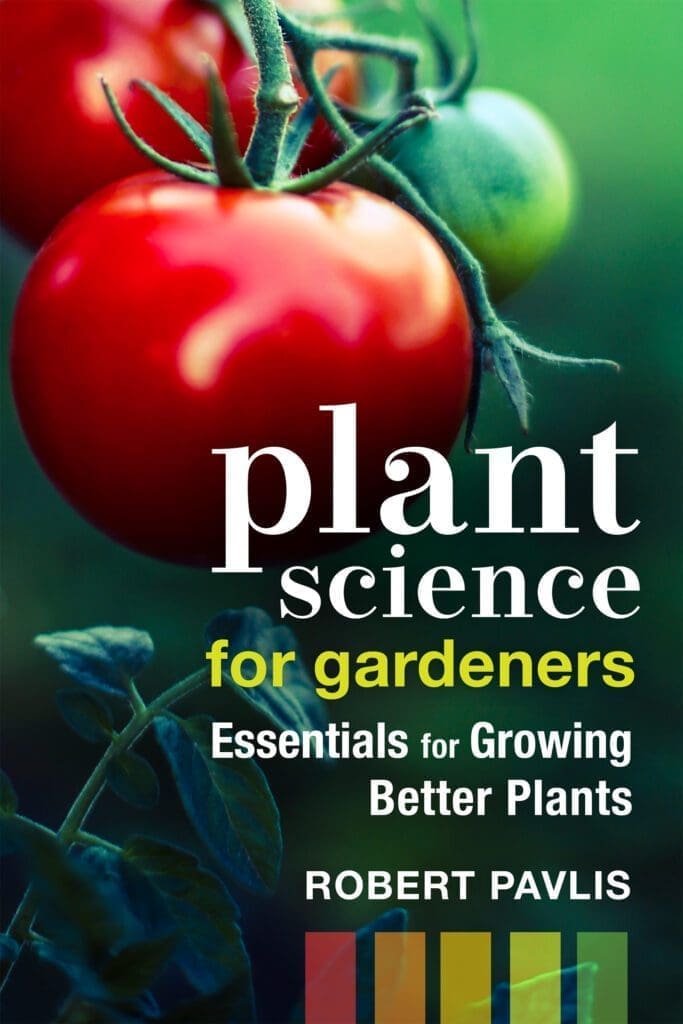
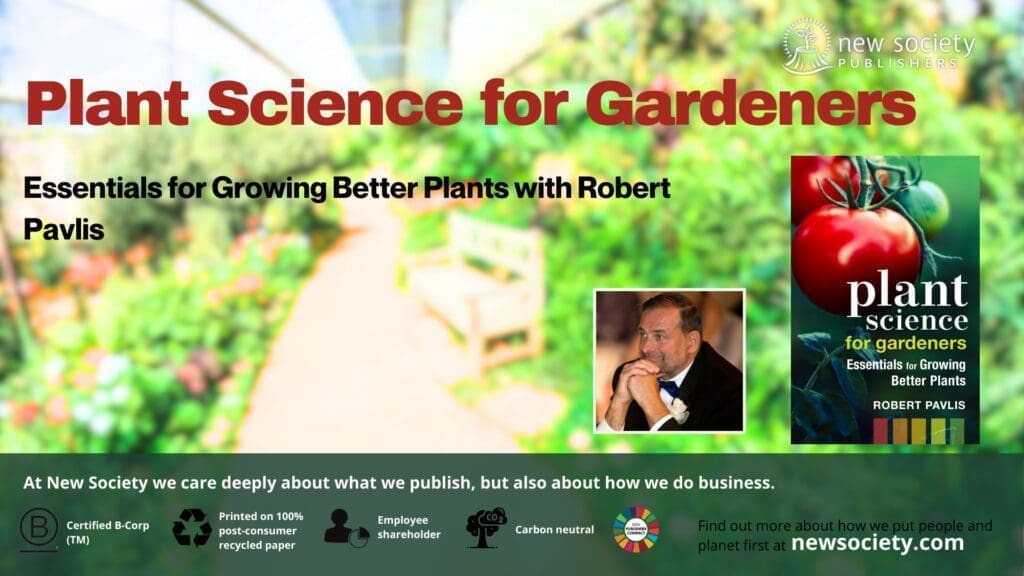
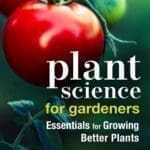
Plant Science for Gardeners

Essentials for Growing Better Plants

A little plant science grows a long way Plant Science for Gardeners empowers growers to analyze common problems, find solutions, and make better decisions in the garden for optimal plant…

Book Awards

SILVER (tie) | 2023 IPPY Awards: Science

Earn up to 32 Points.

A little plant science grows a long way

Plant Science for Gardeners empowers growers to analyze common problems, find solutions, and make better decisions in the garden for optimal plant health and productivity.

Most gardeners learn by accumulating rules – water once a week, never dry out snowdrop bulbs, prune lilacs after flowering, plant garlic in October—the list is endless.

Rules take years to learn and yet leave you floundering when the unexpected strikes and plants look unhealthy, produce poorly, or die.

There is a better way.

By understanding the basic biology of how plants grow, you can become a thinking gardener with the confidence to problem solve for optimized plant health and productivity. Learn the science and ditch the rules! Coverage includes:

  • The biology of roots, stems, leaves, and flowers
  • Understanding how plants function as whole organisms
  • The role of nutrients and inputs
  • Vegetables, flowers, grasses, and trees and shrubs
  • Propagation and genetics
  • Sidebars that explode common gardening myths
  • Tips for evaluating plant problems and finding solutions.

Whether you’re a home gardener, micro-farmer, market gardener, or homesteader, this entertaining and accessible guide shortens the learning curve and gives you the knowledge to succeed no matter where you live.

Praise for the book

Pavlis’ latest is a sure — and enjoyable —way to learn that science.

JEFF LOWENFELS, author, DIY Autoflowering Cannabis and Teaming with Microbes

Read it and your garden will blossom, literally and figuratively.

LEE REICH, PhD, author, Growing Figs in Cold Climates and The Ever Curious Gardener

Another detailed, yet accessible, addition to gardeners’ home libraries.

REBECCA MARTIN, technical editor, Mother Earth News magazine

Table of Contents

  • Introduction
    • Introduction to Plant Science
    • Organization of the Book
    • Terms Used in This Book
  • 1. Plant Basics
    • Cells
    • Xylem and Phloem
    • Photosynthesis
      Plant Myth: Plants Raise the Oxygen Level in Homes
    • ATP and the Energy Cycle
    • Respiration
    • Meristematic Cells
    • Classification of Plants
  • 2. Roots
    • Root Basics
    • Types of Roots
      Plant Myth: Feeder Roots Are Located Under the Dripline
    • Effect of Gravity
    • Cut Roots and Side Roots
      Plant Myth: Circulating Roots Continue to Circulate
    • Conditions That Affect Root Growth
      Plant Myth: Transplant Solutions Grow Better Roots
    • Root Growth in Winter
    • Absorption of Water and Nutrients
       Plant Myth: Is Soil pH Important?
    • Roots and Microbes
      Plant Myth: Purchased Mycorrhizal Fungi Are Good for Plants
      Plant Myth: Roots Grow Towards Water
    • The Rhizosphere
  • 3. Stems
    • The Outer Structure of Stems
    • Internal Structure of Stems
    • Trichomes
    • Buds
    • How Stems Grow
    • The Importance of Photosynthesis
    • Underground Stems
      Plant Myth: Plant Bulbs after the Ground Is Frozen
      Plant Myth: Bearded Iris Should Be Planted with Rhizome Showing
  • 4. Leaves
    • Leaf Structure
    • How Sun Affects Leaves
    • Why Are Some Leaves Red?
      Plant Myth: Evergreen Needles and Oak Leaves Are Acidic
    • Functionality of Damaged Leaves
    • Natural Pesticides
    • Signaling Between Plants
    • Pest-Proof Leaves
    • Water Stress and Wilting Leaves
    • Leaf Abscission
    • Variegated Leaves
  • 5. Flowers
    • Parts of a Flower
    • Pollination
    • What Causes Flowering?
    • Why Do Plants Not Flower?
      Plant Myth: High Phosphate Grows More Blooms
    • Tough Love for Plants
    • Attracting Pollinators
    • Enjoy the Bracts
    • Dioecious and Monoecious Plants
  • 6. Fruits and Seeds
    • What Is a Fruit?
    • The Importance of Fruit
    • Different Types of Fruits
    • Fruit Development
    • Seed Development
    • Suckering Tomato Plants
    • Seeds from Non-Flowering Plants
    • Soil Seed Bank
  • 7. The Whole Plant

    • Life Cycle of Plants
    • Plant Dormancy
    • Movement of Water
    • Movement of Nutrients
      Plant Myth: Leaves Can Be Used to ID Nutrient Deficiencies
    • Movement of Sugars
    • Seasonal Sharing of Resources
    • Overcoming Physical Damage
    • How Do Plants Get Taller?
    • Following the Sun
    • How Light Affects Plant Growth
    • Gravity
  • 8. Woody Plants
    • What Are Woody Plants?
    • Structure of Woody Stems
    • Where Does Wood Come From?
      Plant Myth: Newly Planted Trees Need to Be Staked
    • Storage of Sugars
    • Taproots vs. Fibrous Roots
    • Composition of Wood
    • Apical Dominance
    • Healing Damage
      Plant Myth: Damage on Trees Should Be Painted
    • Conifers
  • 9. Environmental Factors
    • Garden Hardiness Zones
    • Dealing with Cold
    • Protecting Plants from Cold
    • Dealing with Heat
    • Dealing with Water Extremes
    • Adaptability of Plants
    • How Climate Change Affects Gardens
  • 10. Growing from Seeds
    • When Is Seed Mature?
    • The Seed Germination Process
    • The Mysterious Cotyledons
    • Why Do Seeds Stay Dormant?
    • Breaking Dormancy
      Plant Myth: Seeds Can Have Double Dormancy
    • Seed Storage
    • Best Method for Starting Seeds Indoors
  • 11. Selecting Seeds
    • Basic Genetics
    • Hybrids vs. Heirlooms
    • GMO Seeds
    • Days to Maturity
    • Buying Unusual Seeds
  • 12. Vegetative Reproduction
    • Natural Vegetative Reproduction
    • Rooted Stems and Leaves
    • Artificial Vegetative Reproduction
      Plant Myth: Homemade Rooting Hormones Work Well
    • Grafting
  • 13. Plant Names
    • Why Use Botanical Names?
    • Naming Conventions
    • The Proper Way to Name Your Plants
  • Index
  • About the Author
  • Connect with Robert Pavlis
  • About New Society Publishers

Accessibility Information

Product Page Accessibility Display

Conformance Status: EPUB Accessibility Compliant | WCAG level AA Compliant
Screen Reader Compatibility: Designed for an optimal screen reader experience and fully accessible to persons with disabilities.

Content Enhancements

Alternative Text for Images: Descriptive text is provided for all images, ensuring visual content is fully accessible.
Table of Contents: Easy, direct navigation through a clean, structured table of contents.
Reading Order: Enforces a logical and consistent reading order for sequential, uninterrupted content consumption.
Page List: Includes an accurate page list for physical book page referencing and exact academic citation synchronization.
Structural Navigation: Built with a clear hierarchical layout for easy content traversal and section hopping.
Semantic Structure: Employs appropriate semantic markup to ensure absolute text clarity, meaning, and text-to-speech accuracy.

Reading Optimization

Unrestricted Formatting Preferences: User-configured assistive tools, custom typography scaling, line-spacing modifications, and native reading application options are never locked or disabled.
Color Independence: Textual layouts, data states, and links use distinct styles or symbols so that color changes are never the sole method of conveying critical information.
High-Contrast Design: Typography contrast levels comfortably exceed standard baseline parameters to reduce eye strain under any lighting environment.
Non-Visual Accessibility Support: All non-decorative editorial text and data visualizations are optimized to support reading entirely without sight.
Language Tagging: Embedded text attributes direct text-to-speech engines to use correct pronunciation defaults automatically.
Blank Page Removal: Unnecessary blank pages are completely eliminated to ensure a streamlined, smooth reading flow.

Contact Information

For further information or questions contact [email protected]

Explore the Garden Science Series

Meet the Author

author Robert Pavlis

Robert Pavlis has been an avid gardener for over four decades. He is the owner and developer of Aspen Grove Gardens, a 6-acre botanical garden that features over 3,000 varieties of plants. Specializing in soil science, he has been an instructor for Landscape Ontario and is a garden blogger, writer, and chemist. The author of Building Natural Ponds, Pavlis is a well-known speaker whose audiences include Master Gardener groups, horticultural societies, orchid societies, and garden shows such as Canada Blooms and the FarmSmart conference. He teaches gardening fundamentals at the University of Guelph and garden design for the City of Guelph, Ontario, where he currently resides.

More from Robert Pavlis

Articles from the book

You Might Also Like

Reviews

There are no reviews yet.

Be the first to review “Plant Science for Gardeners”

Related Categories

About the Publisher

New Society Publishers has been a leader in sustainable living books since 1980. Our books are printed on 100% post-consumer recycled paper to support the health of the planet.

B Corporation, SDG, and FSC Mixed Paper.

Environmental Benefits Statement of this Book

Coming Soon
Environmental Benefits Statement
Select your currency
Secret Link