Belief #1: Pawpaws are a tropical fruit related to papaya (Carica papaya), bananas, or mango
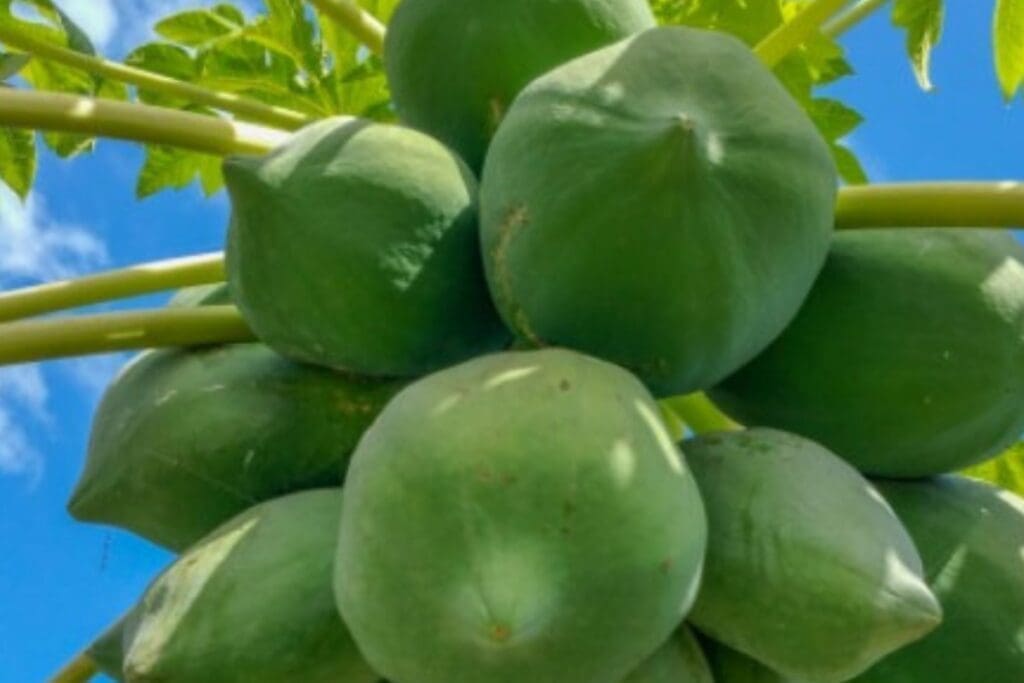
Fact: Pawpaws are not tropical plants, they are a fully temperate species and are not related to any of these species, botanically speaking (although the same common name is applied to both). As mentioned already, pawpaw is in the family Annonaceae and is therefore related to the “custard apples,” such as sugar apple (sitapol), cherimoya, and soursop (guanabana). It is distantly related to the magnolias and is in the order Magnoliaceae. Interestingly it resembles Southern magnolias in leaf shape, flower construction, and dormant leaf buds, if observed closely.
Belief #2: Pawpaws grow best in the forest (or in deep shade)
Fact: Wild pawpaws are usually found as understory plants growing seemingly unaffected by dense shade. However, they perform much better and produce drastically higher fruit yields when grown in fullsun conditions. They can grow and survive in either dense shade or full sun. Dense shade reduces fruit yields dramatically. Pawpaws often need sun protection the first couple of seasons, which may have led to this myth. This is all explained in great detail in later sections on cultivating pawpaw.
Belief #3: Pawpaws are only good to eat when they’ve been exposed to frost in autumn and/or have turned black
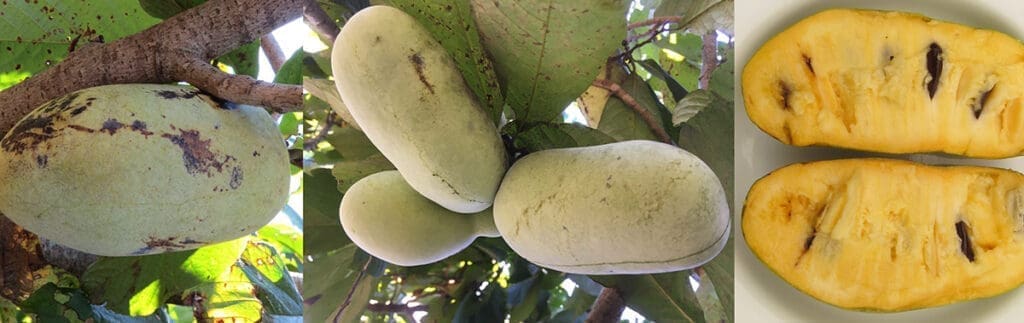
Fact: The vast majority of pawpaws, both wild and cultivars, ripen weeks or even months before the first frost occurs in their native growing range. By the time autumn frosts typically occur within their range in October/November, depending on location, most pawpaw trees are losing leaves, going dormant, and the fruits are completely gone for the season, having mostly ripened in September. In the far northern limits of their range, the fruit may ripen around the time of the first frost, but this is not common in the vast majority of their native range. Frost does not assist ripening or enhance fruit quality in any way and will actually damage the tender fruit. Pawpaws that have turned black are often still good to eat but at this stage are often considered past the prime for most people’s taste preferences. How many people prefer black bananas? Frost and/or cold temperatures are also not a ripening factor whatsoever. Frost will likely damage or destroy pawpaw fruit that is still hanging in the trees, and such an event only ever occurs on those that have late-season ripening fruit and only in the far northern (and not optimal) range of pawpaw growing territory. People that repeat this belief are probably confusing pawpaw with persimmon (Diospyros virginiana), another native fruit worthy of improvement and marketing, and humorously, the frost-ripening effect is not true for them either. Persimmons can and do often fully ripen weeks before the first frost, and frost does not remove astringency in the fruit or assist ripening whatsoever. They do tend to ripen around frost time, though, explaining the misconception.
Belief #4: Pawpaw trees are immune to or unaffected by pests and diseases
Fact: If only that were true! This misconception (sometimes lie) is mostly an oft-repeated marketing ploy that is used to sell more pawpaw trees to new uneducated growers. While certainly much less burdened by the plethora of diseases and insect pests that plague our apples and peaches, pawpaws are by no means immune to diseases and insect pests, and in their native range are actually susceptible to quite a number of damaging organisms. When trees are maintained and well grown on favorable sites, they are often remarkably unbothered. However, they do have their share of “plant karma” and issues to contend with, which tend to become increasingly intense and concentrated in monoculture plantings, as well other stressful environments pawpaws are not adapted to, or on poor soil, and generally unfavorable cultural or site conditions. This will be covered in much detail in chapter 9. That being said, most urban backyard growers will rarely experience much noticeable disease or insect pressure, and pawpaws are definitely one of the easiest fruit trees to successfully grow organically. This makes them very attractive to the niche market farmer, organic grower, or anyone looking to diversify into unusual or specialty crops. However, remember that all species of life are susceptible to diseases, insects, and parasites. Also important to note is it seems in my experience that pawpaw trees grown in rural areas in their native range are likely much more plagued with insects and diseases than those grown in the urban jungle, where pawpaws are in tiny isolated plantings, tucked away from their native (and other) pests.
Belief #5: Pawpaw flowers smell like rotting flesh (or otherwise disgusting/bad/off-putting) and will stink up your entire yard
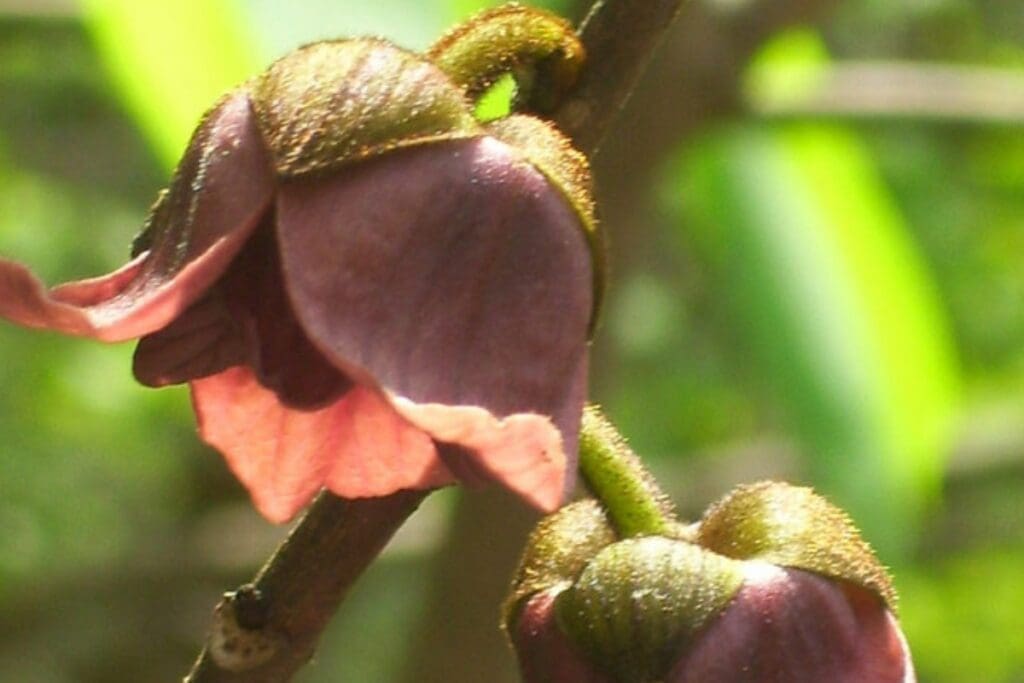
Fact: No, they certainly do not! The flowers have a very faint unusual smell, somewhat yeasty and musky. Although pollinated by flies, the trees do not exude a horrible smell, or hardly any scent at all. The only way to even smell any aroma is to stick your nose directly up to the flower, so they will absolutely not stink up your yard, but exude an almost unnoticeable yeasty fragrance for a short time. This one has been repeated occasionally by our nursery customers and online in a very negative connotation. This one myth really has to go, and fast!