


Pollinators: Myth and Fact
Time Frame: 45 minutes
Overview: The class will discuss their concerns and misconceptions by building understanding and awe for insect pollinators.
Objective: To demystify bee pollinators and learn about the differences between bees and wasps.
Introduction and Activity (40 minutes)
Step 1.
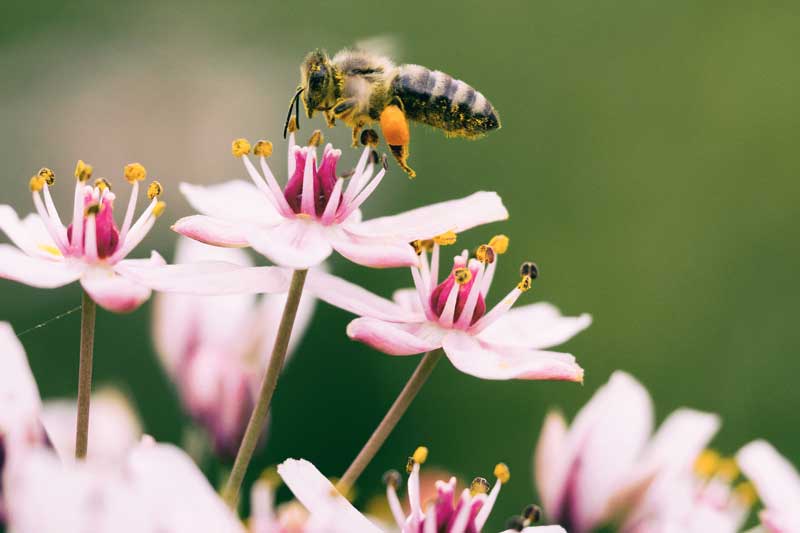
Guide the class through a brainstorm of what they know about pollinators, particularly bees: What kinds of bees have students seen in the garden? What do they look like and how do they behave?
In my conversations with young students, they especially want to talk about traumatic experiences with wasps. I prefer to be direct in these conversations by emphasizing, repeatedly, the substantial differences between wasps and bees. All other bees have their own lifestyles, food storage, and social systems.
Step 2.
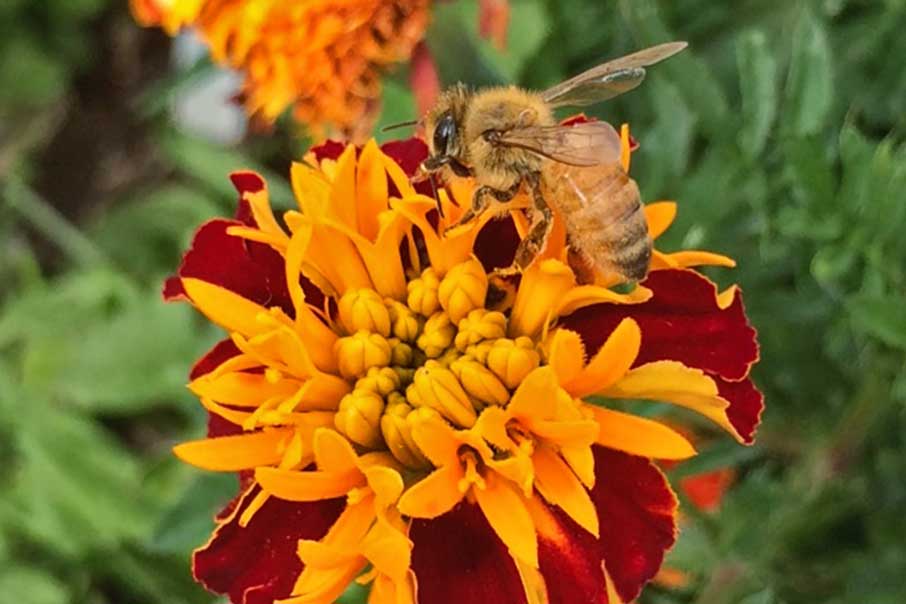
Have the students discuss the differences between yellow jackets, wasps, and pollinating bees and record these features on a classroom chart. Pass around examples of wasp nests and honeybee combs, as well as any sample jars of insects. Educational posters on honeybees can also be helpful in identifying these differences (see Resources).
Step 3.
Introduce the students to additional pollinating bees such as mason bees, bumblebees, and leafcutter bees and what unique qualities should calm, excite, and inspire students. Knowing what they do now about the differences in pollinators, how will students respond and behave toward the pollinators in the garden? How can they remember these bees if they were to see them? What makes the bees memorable and unique?
Step 4.
In pairs, the students will explore the garden and look for different pollinators, keeping track of what they find on their Pollinators in the Garden worksheet. They can survey what they find and make observations on pollinators they know about and others that they don’t.
Assessment (5 minutes)
- Gathering back together, have the students share what they discovered in the garden. How many of the different pollinators did they find? Where did they find them and on what types or color of flowers?
- How did students interact with the pollinators? What decisions did they make when encountering wasps, yellow jackets, and bees?
Preparation
- Educational bee posters
- Pollinator samples
- Nest and comb examples
- Pollinators in the Garden worksheet
Resources
- Girl Next Door Honey. Educational Bee Posters.
- Hillary Sarniñas. “Getting to Know Our Native Northwest Bees.” Washington Park Arboretum Bulletin.
- Sarah Kincaid. Common Bee Pollinators of Oregon Crops. Oregon Department of Agriculture Bulletin.