Go Back

Page Count:256
Images:Black & White Images
Dimensions: 6 × 9 × 0.59 in
Publication Date:April 30, 2024
ISBN:9780865719897
Author:
Sustainability:Printed on 100% recycled paper
Printed in:Canada

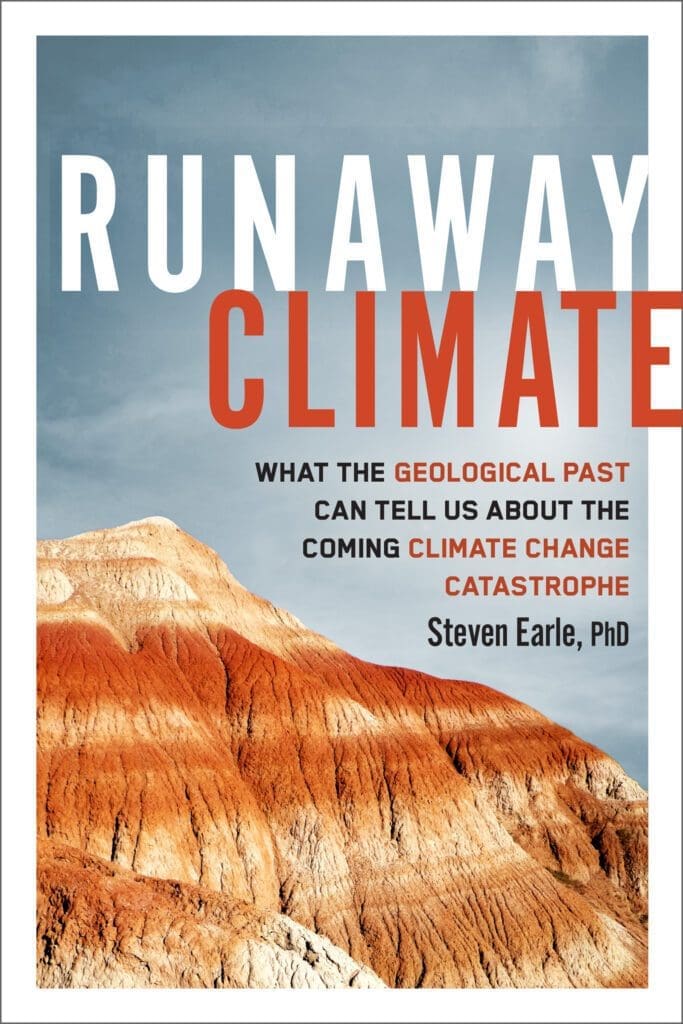
Runaway Climate

What the Geological Past Can Tell Us about the Coming Climate Change Catastrophe

56 million years ago our planet experienced rapid, intense warming known as the Paleocene Eocene Thermal Maximum, resulting in a global temperature increase of about 7°C. Runaway Climate explores the causes of this catastrophic event, its dramatic impact on life on Earth, and its stark lessons for our climate future.

Earn up to 23 Points.

With tipping points and extreme global warming looming, the key to understanding our climate future lies in our distant past

With rising emissions, we are on track to cause rapid global warming with devastating con- sequences. But how bad could climate change get and what might it do to planet Earth and humanity?

Runaway Climate explores the causes of the Paleocene Eocene Thermal Maximum (PETM) rapid climate-heating episode, its dramatic impact on life on Earth, and lessons for our climate future.

Fifty-six million years ago our planet experienced a period of intense warming known as the PETM, resulting in a rapid global temperature increase of about 7°C. Triggered by natural geological processes over millennia and magnified by strong climate feedback loops, the PETM lasted for about 180,000 years and drastically altered life on Earth. Yet in only a few short decades we’ve pumped similar amounts of greenhouse gasses into the atmosphere, making the PETM an unsettlingly apt analogy for our current predicament. This deeply cautionary tale explores:

  • The runaway feedbacks that pushed the PETM’s climate past the tipping point
  • Subsequent cascades of environmental devastation—from plant and animal migrations to ocean acidification, extreme weather, and mass extinctions
  • A sobering vision of life on hothouse Earth—a hostile world of desertification, sea-level rise, climate refugees, and agricultural collapse
  • The urgent need for decisive individual and collective actions to slash carbon emissions, stabilize the climate, and undertake a rapid transition to a cleaner and healthier future.

Scientifically rigorous, yet accessible to a wide audience, Runaway Climate is essential reading for every- one committed to understanding and taking action on the climate emergency.

Praise for the book

If you care at all about our future, you must read Runaway Climate.

Richard Heinberg, Senior Fellow, Post Carbon Institute, and author, Power: Limits and Prospects for Human Survival

Reading this will, I hope, be a prelude to activism that matters.

Bill McKibben, author, The End of Nature

A compelling call to climate action that is uniquely engaging and disturbing in equal measure.

Laura Lengnick, author, Resilient Agriculture: Cultivating Food Systems for a Changing Climate

Table of Contents

Synopsis
Acknowledgments
Preface

Part I What Happened in the Past?
Chapter 1: The Bighorn Basin
Chapter 2: The Late Paleocene World
Chapter 3: Understanding Past Climates
Chapter 4: Changes in the Oceans During the PETM
Chapter 5: Changes on Land During the PETM
Chapter 6: What Caused the PETM Runaway Climate?
Chapter 7: What Is Similar Now and What Is Different?

Part II Where We Are Heading If We Don’t Change Course
Chapter 8: How the Oceans Might Change Under PETM Conditions
Chapter 9: How the Land Might Change Under PETM Conditions
Chapter 10: Where Will Everyone Go?
Chapter 11: What Do We Need to Do Now?

Abbreviations
Appendix
Endnotes
Index
About the Author
A Note About the Publisher

Accessibility Information

Product Page Accessibility Display

Conformance Status: EPUB Accessibility Compliant | WCAG level AA Compliant
Screen Reader Compatibility: Designed for an optimal screen reader experience and fully accessible to persons with disabilities.

Content Enhancements

Alternative Text for Images: Descriptive text is provided for all images, ensuring visual content is fully accessible.
Table of Contents: Easy, direct navigation through a clean, structured table of contents.
Reading Order: Enforces a logical and consistent reading order for sequential, uninterrupted content consumption.
Page List: Includes an accurate page list for physical book page referencing and exact academic citation synchronization.
Structural Navigation: Built with a clear hierarchical layout for easy content traversal and section hopping.
Semantic Structure: Employs appropriate semantic markup to ensure absolute text clarity, meaning, and text-to-speech accuracy.

Reading Optimization

Unrestricted Formatting Preferences: User-configured assistive tools, custom typography scaling, line-spacing modifications, and native reading application options are never locked or disabled.
Color Independence: Textual layouts, data states, and links use distinct styles or symbols so that color changes are never the sole method of conveying critical information.
High-Contrast Design: Typography contrast levels comfortably exceed standard baseline parameters to reduce eye strain under any lighting environment.
Non-Visual Accessibility Support: All non-decorative editorial text and data visualizations are optimized to support reading entirely without sight.
Language Tagging: Embedded text attributes direct text-to-speech engines to use correct pronunciation defaults automatically.
Blank Page Removal: Unnecessary blank pages are completely eliminated to ensure a streamlined, smooth reading flow.

Contact Information

For further information or questions contact [email protected]

Book Extras and Resources

More from Steven Earle

Meet the Author

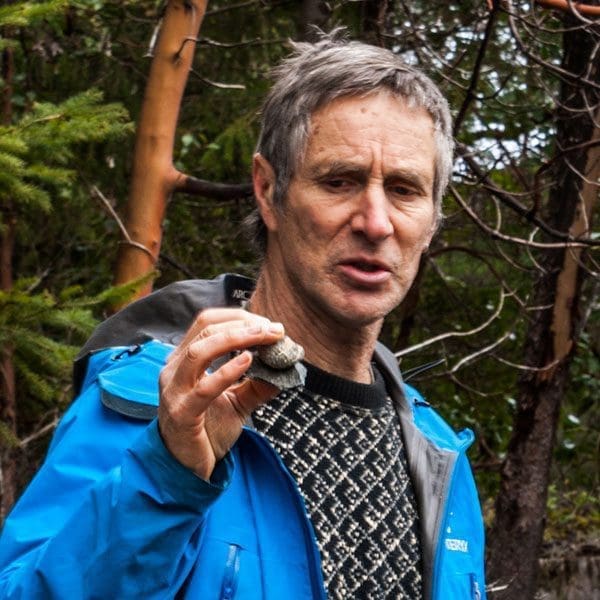
author Steven Earle, examining some rocks in his hand

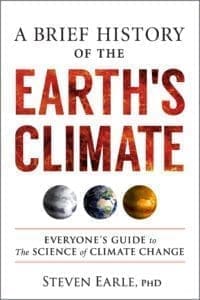
Steven Earle, PhD, has worked as a geologist and developed and taught university-level courses in earth sciences and climate change for over four decades. He is the author of the IPPY award-winning A Brief History of The Earth’s Climate and the widely used post-secondary textbook Physical Geology, now in its second edition. A dedicated community activist, he spearheads local engagement with climate change solutions including low-carbon transportation initiatives, heating systems, and land stewardship. Steven and his family live in a nearly net-zero house on a small sustainable farm on Gabriola Island, BC, Canada.
Articles from the book

You Might Also Like

Reviews

There are no reviews yet.

Be the first to review “Runaway Climate”

Related Categories

About the Publisher

New Society Publishers has been a leader in sustainable living books since 1980. Our books are printed on 100% post-consumer recycled paper to support the health of the planet.

B Corporation, SDG, and FSC Mixed Paper.
Select your currency
Secret Link