Go Back

Page Count:256
Dimensions: 6 × 9 × 0.59 in
Publication Date:November 25, 2025
ISBN:9781774060360
Sustainability:Printed on 100% recycled paper
Printed in:Canada

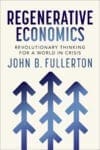
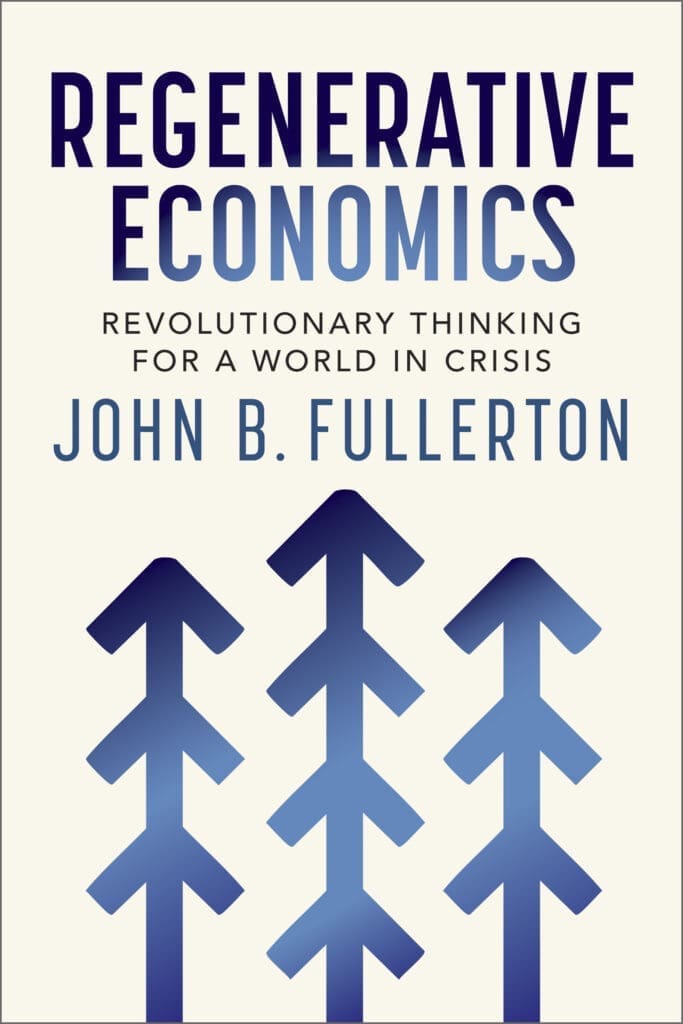
Regenerative Economics

Revolutionary Thinking for a World in Crisis

Regenerative Economics is based on the deceptively simple idea that an economic system should emulate the process and patterns that define all life. This science-based next evolution of economics explains the root cause of the polycrisis and promises a hopeful pathway forward, rooted in unseen potential and abundance

Earn up to 25 Points.

A bold vision of an economy as an intelligent living organism, freed from the mindless finance algorithm, unlocking unseen potential

Regenerative Economics is based on the deceptively simple idea that an economic system should emulate the process and patterns that define all life, enabling it to adapt and evolve to higher levels of complexity. This science-based next evolution of economics explains the root cause of the polycrisis–the compounding impacts of climate change, ecosystem and biodiversity loss, planetary systems breakdown, and increasing social and economic inequity—and promises a hopeful pathway forward at this pivotable moment.

Rather than reacting to crisis after crisis, the purpose of a regenerative economy is to create the conditions that nurture and sustain health and all life.

This hard-hitting and scientifically rigorous yet ultimately hopeful book:

  • Identifies the unseen fatal error of our current economic model
  • Outlines a set of key regenerative design principles to navigate the polycrisis
  • Prescribes transformative individual actions and policies which both embrace and move beyond current materialist ideas of sustainability, circularity, and degrowth, to redefine systemic health and true value within the context of a whole-living-systems approach
  • Offers a fresh pathway through the polycrisis and toward a new economy—one that prioritizes human and planetary well-being, operates within ecological limits, and promotes a more just and sustainable future.

This seminal work is required reading for business, government, and community leaders; economic thinkers; academics; and anyone who questions the future of capitalism given the reality of finite planetary boundaries and growing social injustice.

Table of Contents

  • Foreword
  • Part I
    • Chapter 1: Introduction
    • Chapter 2: From a Mechanistic to a Holistic Worldview
    • Chapter 3: Eight Principles of Regenerative Economics
    • Chapter 4: Regenerative Economies Emerging in the Real World
    • Chapter 5: Creating a Regenerative Civilization
  • PART II
    • Chapter 6: Introduction to Part – A Decade of Observations, Learnings, and Challenges
    • Chapter 7: Misunderstandings About Regeneration
    • Chapter 8: The Regenerative Paradigm
    • Chapter 9: Epiphany – The Missing Institution of the Commons
    • Chapter 10: Regenerative Technology – an Oxymoron?
    • Chapter 11: The Finance Algorithm
    • Chapter 12: Reimagining Public Policy
  • Epilogue
    Notes
    Acknowledgment
    About the Author
    About Capital Institute

Accessibility Information

Product Page Accessibility Display

Conformance Status: EPUB Accessibility Compliant | WCAG 2.2 AAA Compliant
Screen Reader Compatibility: Designed for an optimal screen reader experience and fully accessible to persons with disabilities.

Content Enhancements

Alternative Text for Images: Descriptive text is provided for all images, ensuring visual content is fully accessible.
Table of Contents: Easy, direct navigation through a clean, structured table of contents.
Reading Order: Enforces a logical and consistent reading order for sequential, uninterrupted content consumption.
Page List: Includes an accurate page list for physical book page referencing and exact academic citation synchronization.
Structural Navigation: Built with a clear hierarchical layout for easy content traversal and section hopping.
Semantic Structure: Employs appropriate semantic markup to ensure absolute text clarity, meaning, and text-to-speech accuracy.

Reading Optimization

Unrestricted Formatting Preferences: User-configured assistive tools, custom typography scaling, line-spacing modifications, and native reading application options are never locked or disabled.
Color Independence: Textual layouts, data states, and links use distinct styles or symbols so that color changes are never the sole method of conveying critical information.
High-Contrast Design: Typography contrast levels comfortably exceed standard baseline parameters to reduce eye strain under any lighting environment.
Non-Visual Accessibility Support: All non-decorative editorial text and data visualizations are optimized to support reading entirely without sight.
Language Tagging: Embedded text attributes direct text-to-speech engines to use correct pronunciation defaults automatically.
Blank Page Removal: Unnecessary blank pages are completely eliminated to ensure a streamlined, smooth reading flow.

Book Extras and Resources

More from John Fullerton

Meet the Author

author John Fullerton

John Fullerton is an unconventional economist, impact investor, writer, and, some have said, philosopher. He is considered the architect of Regenerative Economics, first conceived in 2015 in the work “Regenerative Capitalism: How Universal Patterns and Principles Will Shape the New Economy.”

After a successful 20-year career on Wall Street where he was a Managing Director of what he calls “the old JPMorgan,” John listened to a persistent inner voice and walked away in 2001 with no plan, but many questions. A few months later he experienced the events of 9/11 firsthand, and after the 2008 Financial Crisis, John created the Capital Institute to explore ever deepening questions about the future of capitalism.

John’s revolutionary ideas have been met with wide, global acclaim through his writings, talks, and his 8-week online course “Introduction to Regenerative Economics.” A member of the Club of Rome, John was featured in the 2021 award winning documentary, Going Circular, with James Lovelock. He lives in Stonington, CT.


Articles from the book

You Might Also Like

Reviews

There are no reviews yet.

Be the first to review “Regenerative Economics”

Related Categories

About the Publisher

New Society Publishers has been a leader in sustainable living books since 1980. Our books are printed on 100% post-consumer recycled paper to support the health of the planet.

B Corporation, SDG, and FSC Mixed Paper.
Select your currency
Secret Link